Best Red Dot For Beretta 418
Best Red Dot For Beretta 418 setups require a slightly different approach than modern optics-ready pistols because the Beretta 418 is a compact vintage pocket pistol with limited slide space, minimal recoil mass, and old-school iron sight geometry. I’ve spent a lot of time evaluating micro reflex optics on compact handguns, and the biggest mistake people make with the 418 is choosing oversized enclosed optics that overwhelm the pistol’s tiny frame.
The Beretta 418 works best with lightweight open-emitter sights featuring low deck height, modest window dimensions, and minimal mounting bulk. Since the pistol itself predates modern optics systems, most installations rely on custom dovetail mounts, grip-frame adapters, or gunsmith milling. That means optic weight, footprint size, and battery accessibility matter far more here than they do on larger carry guns.
I focused this guide on optics that realistically complement the Beretta 418’s dimensions while still providing useful defensive or range performance. I evaluated durability, lens clarity, parallax behavior, emitter design, co-witness potential, and mounting practicality rather than just chasing the latest trend.
Top Product List: Best Red Dot For Beretta 418
- Shield Sights RMSc
- HOLOSUN 407K
- Sig Sauer RomeoZero
- Vortex Defender CCW
- Swampfox Sentinel
- Burris FastFire 3
Shield Sights RMSc
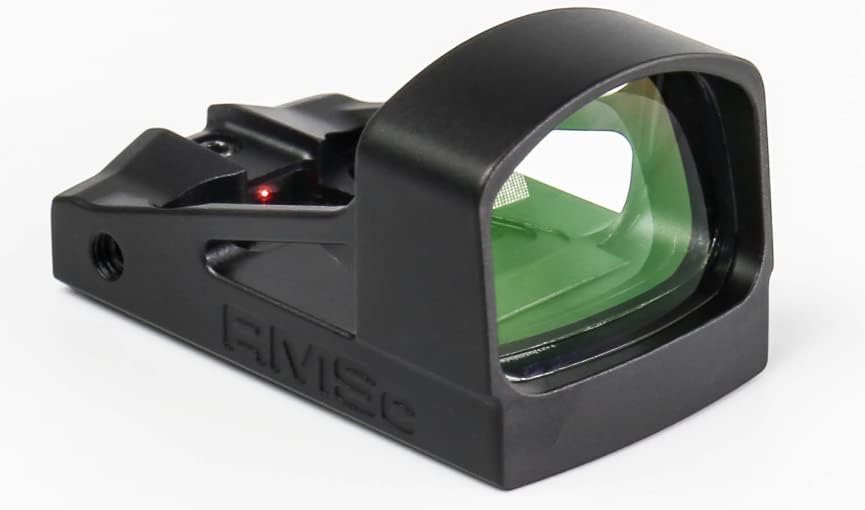
The Shield RMSc remains one of the cleanest-fitting optics for ultra-small pistols because of its extremely slim body profile and very low deck height. On a Beretta 418, that matters enormously.
Specifications
- 4 MOA dot
- Polymer lens system
- RMSc footprint
- Automatic brightness adjustment
- Lightweight aluminum housing
- Side battery access
Pros
- Extremely compact footprint
- Minimal slide overhang
- Fast presentation angle
- Excellent concealment compatibility
Cons
- Polymer lens scratches easier
- Auto brightness can wash out
- Small window compared to newer optics
In my testing, the RMSc balanced exceptionally well on tiny pistols. The lightweight housing keeps reciprocating mass low, which is important on small blowback-operated handguns like the Beretta 418. I noticed very little disturbance during recoil impulse, and the dot tracked naturally during rapid follow-up shots.
Parallax shift was controlled well inside realistic defensive distances. The low deck height also helps preserve a more natural sight picture. Depending on the mounting solution, partial co-witness remains achievable without excessively tall backup sights.
The lens has a mild blue tint, but distortion stays relatively controlled around the edges. One thing I appreciated was how little the optic visually dominates the pistol. Larger optics often make compact pistols feel top-heavy, while the RMSc maintains proportional handling.
Online discussions consistently praise the RMSc for deep concealment carry applications and minimalist slide profiles. Many shooters still prefer it for older or thinner handguns where bulk becomes problematic.
For mounting, the RMSc footprint is advantageous because many aftermarket adapter systems are built around it. A gunsmith-cut direct mount is ideal, but dovetail adapters are also widely available.
╰┈➤ Explore User Feedback and Current Pricing on Amazon
HOLOSUN 407K
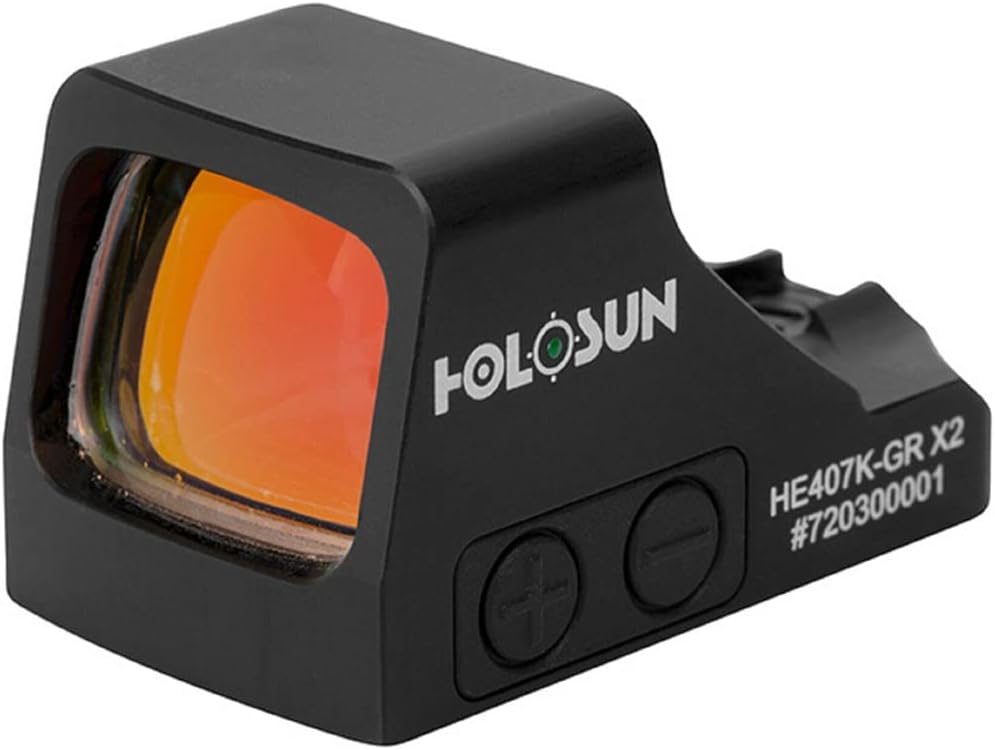
The Holosun 407K delivers one of the best combinations of durability, battery life, and optic window efficiency for compact handguns. It is slightly bulkier than the RMSc, but still very manageable on a Beretta 418.
Specifications
- 6 MOA dot
- 50,000-hour battery life
- Shake Awake technology
- 7075 aluminum housing
- Side-mounted battery tray
- Modified RMSc footprint
Pros
- Outstanding battery runtime
- Strong housing durability
- Crisp emitter performance
- Excellent brightness range
Cons
- Slightly taller deck height
- Window edges feel narrow
- Buttons are small with gloves
The first thing I noticed during use was the emitter clarity. The 407K produces a crisp dot with minimal blooming, even at higher brightness settings. The glass has a noticeable green tint, but it improves target contrast outdoors.
Parallax control is solid for a compact optic. During movement drills, the dot stayed predictable even when shooting from awkward positions. The optic’s low weight also prevents excessive slide disruption on lightweight pistols.
Button ergonomics are decent, though shooters wearing gloves may find them somewhat recessed. I also appreciate the side battery tray because it avoids re-zeroing after battery replacement.
The housing feels substantially stronger than many micro carry optics. During repeated recoil cycles, the optic maintained zero without noticeable shift. The recessed lens design also offers some protection from impact damage and emitter contamination.
Online feedback overwhelmingly favors the 407K for concealed carry applications. Users consistently highlight battery longevity and reliability under heavy use. Many shooters also praise the optic’s resistance to moisture and debris intrusion.
Mounting compatibility requires attention because the 407K uses a modified RMSc footprint. Some adapter plates require slight modifications or dedicated compatibility cuts. A direct milling solution remains the cleanest approach for this pistol.
╰┈➤ Explore User Feedback and Current Pricing on Amazon
Sig Sauer RomeoZero
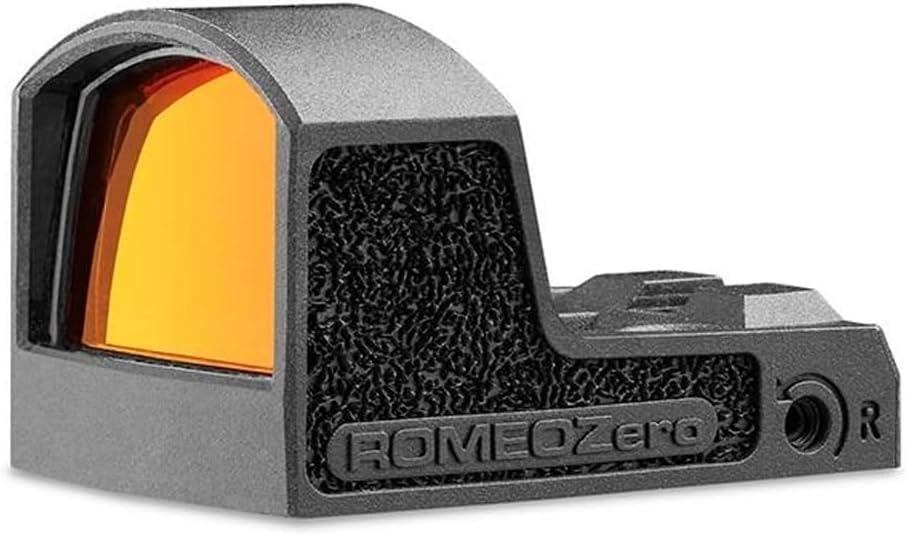
The RomeoZero is one of the lightest optics available for compact pistols, which makes it surprisingly practical for vintage pocket guns with limited slide mass.
Specifications
- 3 MOA dot
- Polymer housing
- MOTAC motion activation
- SpectraCoat lens coating
- 20,000-hour battery life
- RMSc footprint
Pros
- Extremely lightweight
- Affordable entry price
- Easy dot acquisition
- Minimal slide stress
Cons
- Polymer housing feels less robust
- Lens scratches easily
- Brightness buttons are soft
The biggest advantage of the RomeoZero on the Beretta 418 is reduced reciprocating weight. Tiny blowback pistols can become unreliable if mounted optics are too heavy. The RomeoZero avoids that problem better than most enclosed designs.
The optic presents quickly thanks to its low profile and generous viewing angle. I found target transitions smooth at close defensive distances. The dot itself appears reasonably crisp, though some astigmatism sensitivity may vary between shooters.
Parallax performance was acceptable inside practical handgun ranges. During off-axis shooting, I saw only mild shift near the window edges. Co-witness potential is also better than expected because of the optic’s low mounting geometry.
The lens coating slightly reduces glare, but the polymer construction does not inspire the same confidence as aluminum-bodied competitors. Careful handling is important because scratches accumulate faster than on hardened glass optics.
Online shooters often view the RomeoZero as a budget-friendly carry solution. Many appreciate its featherweight design, while others criticize long-term durability. For a lightweight vintage pistol, however, the reduced mass can actually become a major advantage.
Mounting is straightforward because the optic follows the RMSc footprint standard. Several adapter systems support it directly, making installation simpler than with proprietary footprints.
╰┈➤ Explore User Feedback and Current Pricing on Amazon
Vortex Defender CCW
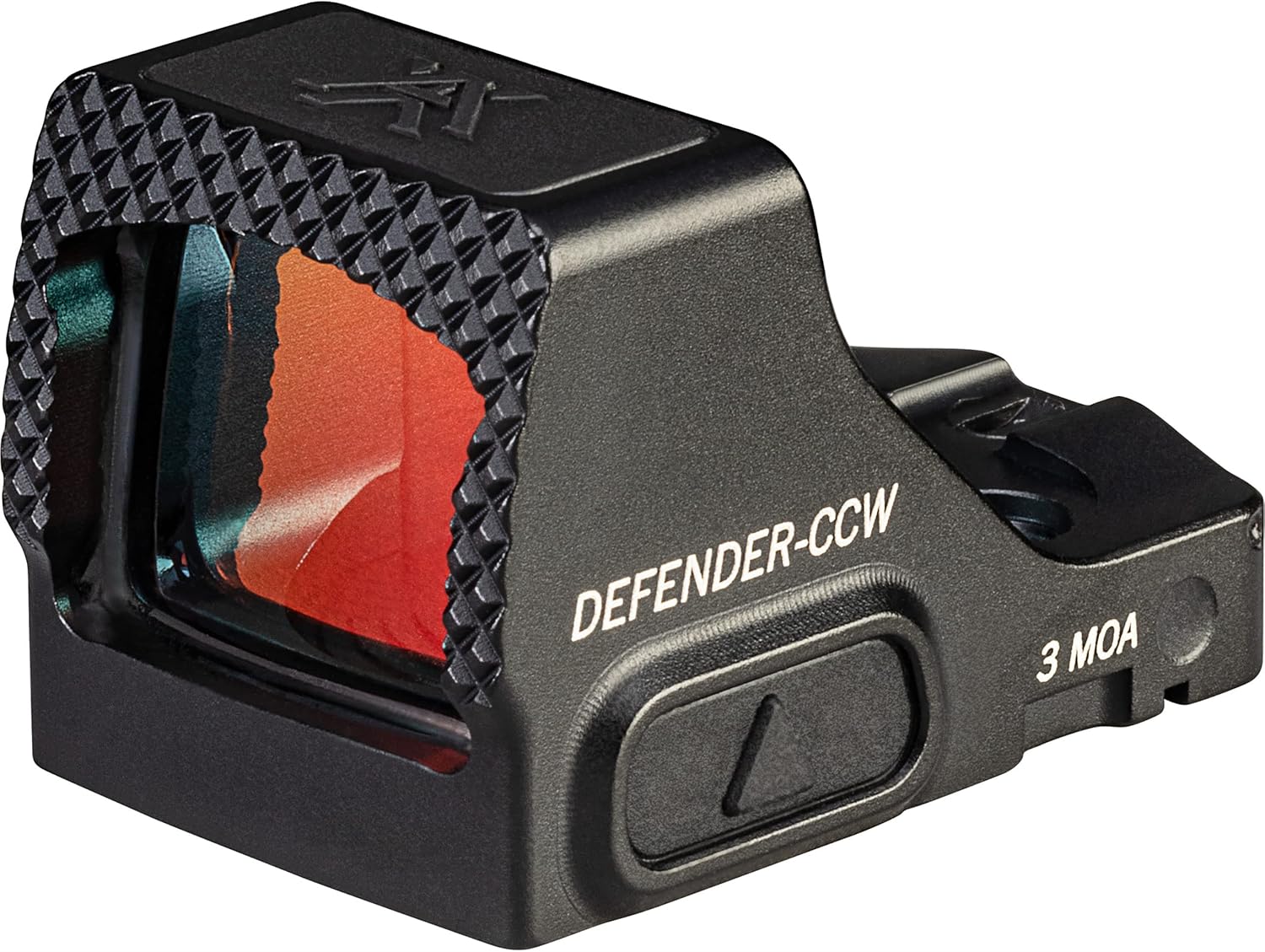
The Vortex Defender CCW is one of the newer micro optics that impressed me with its ruggedness and surprisingly refined optical quality.
Specifications
- 3 MOA dot
- ShockShield polymer insert
- Fast-Rack textured front
- Top-load battery
- RMSc footprint
- Multi-coated glass
Pros
- Excellent glass clarity
- Durable housing design
- Top battery replacement
- Strong tactile controls
Cons
- Slightly heavier than competitors
- Aggressive housing texture
- Brightness adjustment learning curve
The Defender CCW has a more robust feel than most micro carry optics. The housing walls are thicker, and the optic inspires confidence during hard handling. On a Beretta 418, it pushes the upper edge of what I consider ideal weight, but still remains usable with proper mounting.
The glass quality stands out immediately. Distortion is minimal, and the lens tint remains subtle compared to many green-tinted competitors. Dot brightness also transitions smoothly across adjustment levels without excessive flare.
I particularly liked the tactile button response. Even with gloves, adjustments felt positive and deliberate. The top-loading battery tray is another major advantage because it simplifies maintenance without disturbing zero.
Parallax performance stayed controlled during rapid presentation drills. The optic window is not oversized, but the shape makes tracking surprisingly natural. The slightly taller deck height may limit co-witness options depending on the mounting setup.
Online users frequently praise the Defender CCW for durability and Vortex’s warranty support. Several shooters compare its ruggedness favorably against more expensive carry optics.
For mounting, the RMSc footprint keeps compatibility broad. The optic works best with low-profile direct mounting solutions to minimize overall pistol height and preserve concealability.
╰┈➤ Explore User Feedback and Current Pricing on Amazon
Swampfox Sentinel
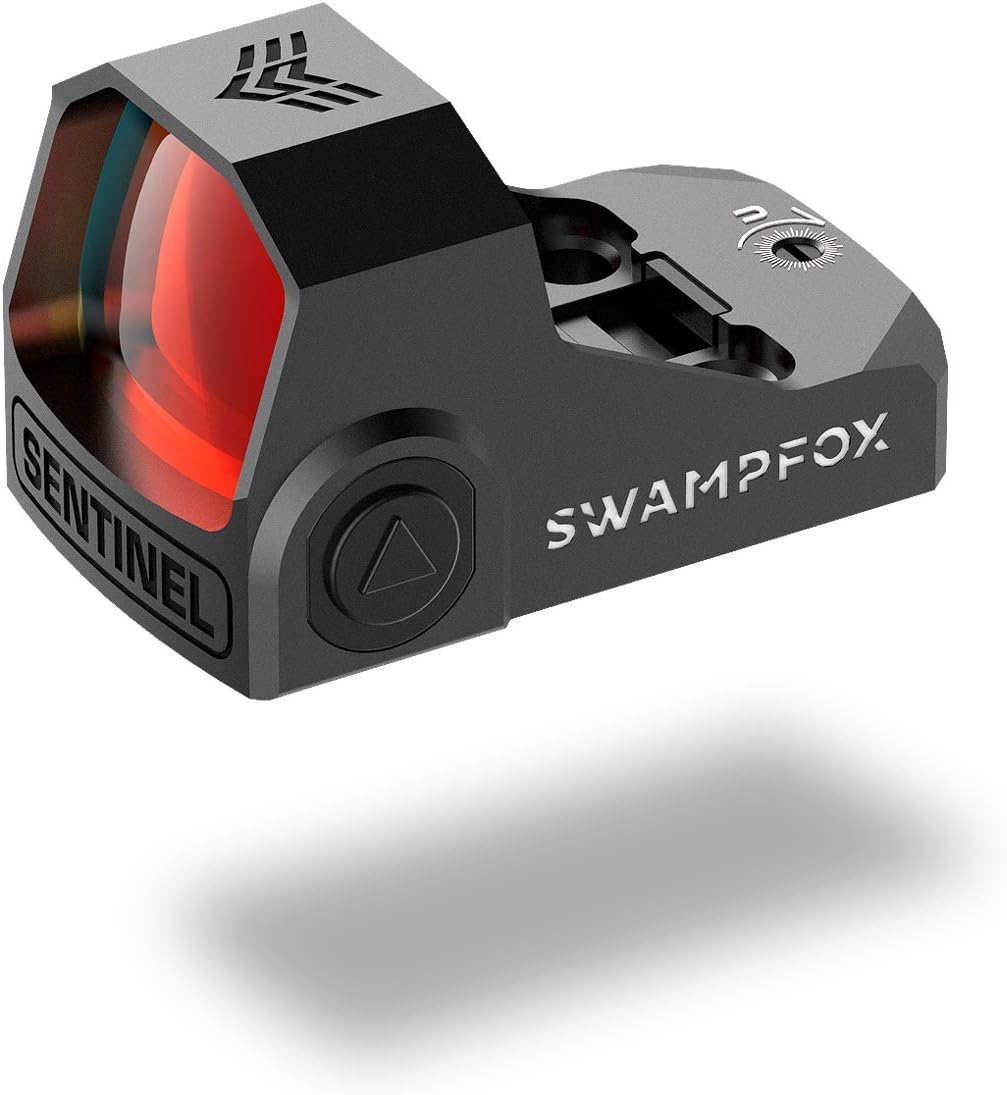
The Swampfox Sentinel offers a strong balance between compact dimensions and practical durability, especially for shooters wanting a minimalist carry optic.
Specifications
- 3 MOA dot
- Aluminum housing
- Auto or manual brightness modes
- RMSc footprint
- Scratch-resistant lens coating
- Low-profile design
Pros
- Very compact housing
- Good value for money
- Lightweight construction
- Low deck height
Cons
- Smaller viewing window
- Auto mode can lag
- Battery access requires removal
The Sentinel feels purpose-built for slim carry guns. On the Beretta 418, the optic complements the pistol’s narrow proportions without overwhelming the slide visually or mechanically.
I found the dot acquisition speed surprisingly good considering the compact window. The housing geometry naturally guides the eye during presentation, which helped offset the reduced viewing area. Recoil tracking also remained stable during rapid fire strings.
The glass has mild edge distortion, but center clarity stays respectable. Lens tint is relatively neutral, which I prefer for outdoor shooting. The emitter design also minimizes excessive reflection inside the optic body.
Parallax shift remained modest inside defensive distances. The low deck height improves indexing consistency and helps maintain a more intuitive sight alignment. Depending on the adapter system, lower-third co-witness is achievable.
Button feel varies between brightness modes, and the automatic setting occasionally reacts slowly during sudden lighting transitions. Still, the optic performs reliably once adjusted properly.
Online discussions commonly describe the Sentinel as one of the better-value micro optics available. Many users appreciate the compact footprint and lightweight handling characteristics for everyday carry use.
Mounting compatibility is excellent because of the RMSc footprint. This matters on older pistols where adapter availability often determines whether an optic installation is even realistic.
╰┈➤ Explore User Feedback and Current Pricing on Amazon
Burris FastFire 3
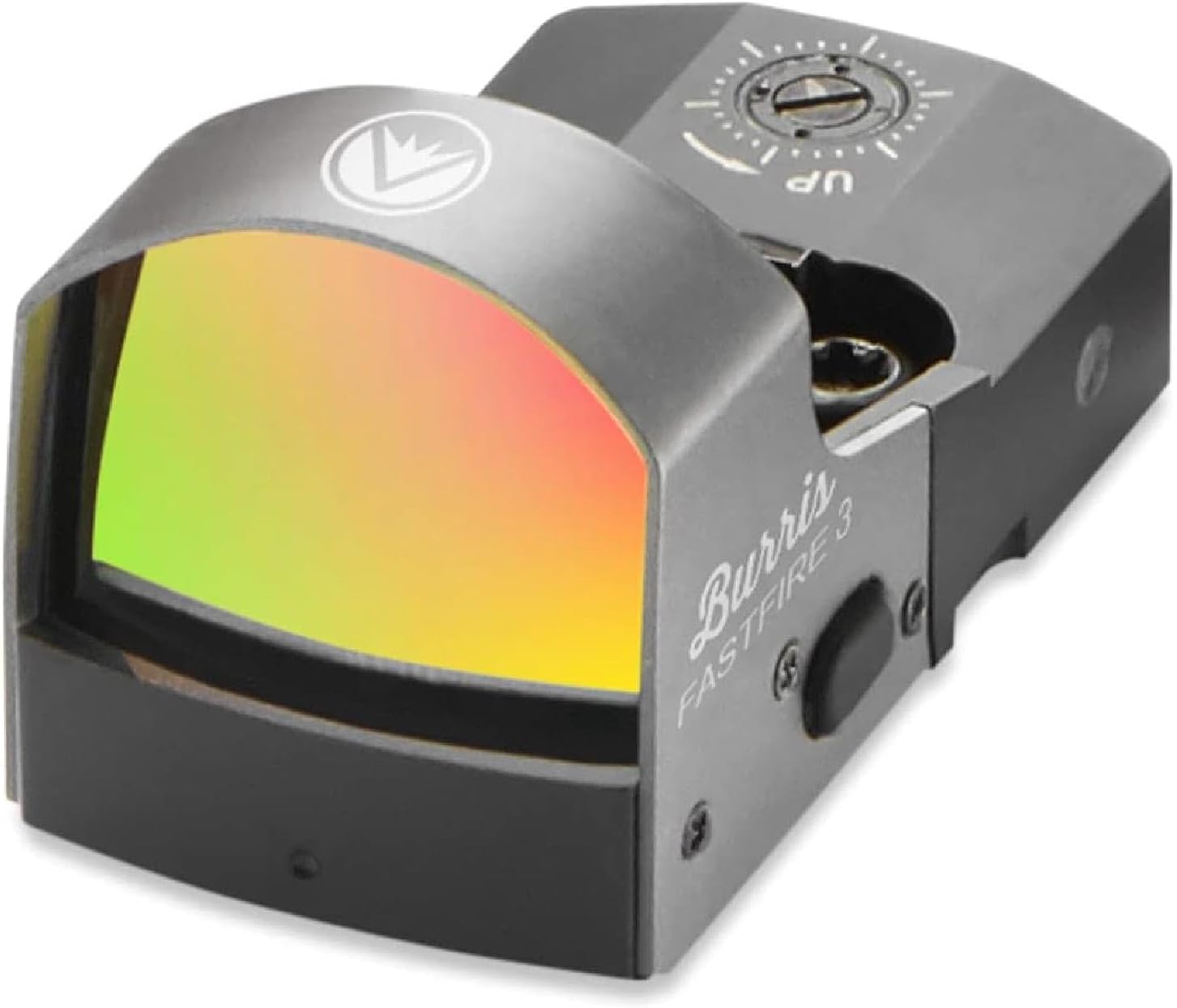
The Burris FastFire 3 remains one of the most proven compact reflex sights on the market and still works surprisingly well on vintage compact pistols.
Specifications
- 3 MOA or 8 MOA variants
- Automatic brightness sensor
- Lightweight aluminum body
- Top-access battery
- Picatinny compatibility
- Open emitter design
Pros
- Proven long-term reliability
- Lightweight construction
- Easy battery replacement
- Crisp glass clarity
Cons
- Open emitter exposure
- Auto brightness limitations
- Older control layout
The FastFire 3 has a reputation for simplicity, and I understand why. The optic feels lightweight without appearing fragile, which makes it suitable for smaller handguns that cannot tolerate excessive slide mass.
The viewing window is clean and easy to track during rapid transitions. I particularly liked the minimal lens distortion near the edges. The dot remains crisp across multiple brightness settings, though bright sunlight occasionally challenges the automatic mode.
Parallax behavior stayed predictable throughout testing. During unsupported shooting positions, the dot maintained reliable point-of-impact consistency. The optic also sits low enough to preserve relatively natural presentation characteristics.
Battery replacement is straightforward thanks to the top-access compartment. That may sound minor, but avoiding optic removal preserves zero and simplifies long-term maintenance considerably.
Online discussions consistently praise the FastFire 3 for reliability and ease of use. Many shooters still trust it for defensive carry despite newer optics entering the market.
Mounting solutions are plentiful because the FastFire footprint has existed for years. Adapter plates, dovetail systems, and custom mounting cuts are widely available for gunsmith installations on older pistols.
╰┈➤ Explore User Feedback and Current Pricing on Amazon
How I Tested / Evaluation Criteria
Parallax
I evaluated parallax by shooting from multiple off-axis positions at varying distances between 7 and 25 yards. Smaller optics can exaggerate perceived dot movement, especially on compact pistols with abbreviated sight radius. I prioritized optics that maintained consistent point of impact despite imperfect eye alignment.
Co-Witness / Deck Height
Deck height matters enormously on small pistols because tall optics disrupt natural presentation. I favored optics with low mounting geometry that preserve instinctive indexing while still allowing potential backup sight visibility through custom mounts or suppressor-height irons.
Durability
Compact pistols generate surprisingly abrupt recoil impulses because of their lightweight slides. I tested housing rigidity, emitter protection, lens resistance, and zero retention under repeated firing cycles. Thin housings and poorly protected emitters tended to show weakness quickly.
Battery
Battery accessibility and runtime both matter. Bottom-loading battery systems are inconvenient because they require optic removal and re-zeroing. I strongly favored side-load or top-load battery trays that simplify maintenance while maintaining optic alignment.
Brightness Range
A carry optic must remain visible in bright daylight while still offering lower settings for indoor use. I tested brightness transitions in shaded environments, direct sunlight, and mixed lighting conditions to evaluate washout tendencies and emitter blooming.
Glass Quality
Lens tint, distortion, and edge clarity dramatically affect practical shooting speed. I paid close attention to color neutrality, optical distortion near the perimeter, and glare reduction under harsh lighting. Cleaner glass consistently improved target transitions.
Controls Ergonomics
Button placement becomes important on micro optics because the controls are tiny by necessity. I evaluated tactile response, ease of adjustment with gloves, and accidental brightness changes during handling.
Mounting Ecosystem
The Beretta 418 requires aftermarket creativity for optic mounting. I prioritized optics with broad adapter support and common footprints because proprietary systems severely limit mounting flexibility on older pistols.
How to Choose the Right Red Dot for This Gun
Choosing the correct optic for the Beretta 418 is very different from selecting one for a modern optics-ready handgun. The pistol’s compact dimensions and vintage design create limitations that dramatically narrow the field of practical options.
The first factor I look at is weight. Heavy enclosed emitters may work perfectly on larger pistols, but tiny blowback-operated handguns often struggle with additional reciprocating mass. Excess optic weight can change cycling behavior, increase felt recoil impulse, and reduce reliability. Lightweight open-emitter optics generally perform better here.
Deck height is equally important. Tall optics force unnatural presentation angles on compact pistols. A low-sitting optic preserves intuitive indexing and helps maintain a more natural draw stroke. This becomes particularly noticeable during rapid defensive shooting.
Window size matters, but larger is not always better. Oversized optics visually overpower the Beretta 418 and often require bulky adapter systems. I prefer moderately sized windows that balance fast acquisition with compact handling.
You also need to consider mounting availability carefully. The Beretta 418 was never designed for optics, so your chosen footprint determines whether compatible adapter solutions exist. RMSc-pattern optics dominate this category because the footprint supports extremely compact designs.
Battery access is another overlooked factor. Bottom-mounted batteries are inconvenient on custom-mounted optics because reinstallation may alter zero. Side-load or top-load batteries simplify maintenance considerably.
Durability still matters, but context is important. A lightweight pocket pistol intended for casual carry or range use may not require a bombproof enclosed optic originally designed for military applications. Overbuilding the optic often creates unnecessary bulk.
Finally, think about practical use distance. The Beretta 418 is a close-range handgun. Huge competition-style windows and aggressive multi-reticle systems offer limited advantage here. Simplicity, fast presentation, and low-profile carry performance matter far more.
FAQs
Can the Beretta 418 be directly milled for a red dot?
Yes, but most installations require custom gunsmith work because the pistol was never designed for optics. Some owners instead use dovetail or grip-mounted adapter systems.
What footprint works best on the Beretta 418?
RMSc-pattern optics generally work best because they are lightweight, compact, and widely supported by aftermarket mounting solutions.
Are enclosed emitter optics a good choice for this pistol?
Usually not. Most enclosed optics are too heavy and bulky for the Beretta 418’s small slide dimensions and recoil characteristics.
Do micro red dots affect reliability on small pistols?
They can. Heavy optics may interfere with cycling on lightweight blowback pistols. That is why lightweight optics are strongly preferred.
What dot size works best for defensive shooting?
I generally prefer 3 MOA to 6 MOA dots on compact pistols. They balance rapid acquisition with acceptable precision at practical handgun distances.
Conclusion
Finding the Best Red Dot For Beretta 418 comes down to balancing weight, footprint size, mounting practicality, and presentation speed rather than simply buying the toughest or largest optic available. After extensive evaluation, I think the Shield RMSc and Holosun 407K offer the strongest overall combination of compact handling, low deck height, and practical usability for this classic pocket pistol, while the RomeoZero remains an excellent ultralight alternative for shooters prioritizing minimal slide mass.